





By Reuben J. Brown, Gaige Davila, Lizzie Tomlin and Emily Hedegard
Robot dogs, flavored condoms, Dungeons and Dragons VR classes and 100 items related to chicken coops: All these are things bought by Arizona parents using Empowerment Scholarships Accounts — state-funded financial accounts provided to families to spend on tuition, curriculum or other items to help educate their children — instead of placing them in public or charter schools.
Over 100,000 students have now enrolled in Arizona’s ESA system, the first program of its kind in the country, and the large enrollment figures are having significant consequences for the state budget and the program’s administration.
In 2025, the ESA program cost the state more than $870 million, according to the Grand Canyon Institute, a centrist think tank, as families that previously paid private school tuition received ESA subsidies from the state. The scale has also made auditing ESA transactions “a tremendous strain” for the Arizona Department of Education, according to Superintendent Tom Horne. Some ESA families have used their vouchers to pay for items that the program itself says are disallowed, such as “Hemp Calming Chews for Dogs Anxiety 200pcs.,” according to public records the state shared with The Beam.
When the ESA program was created in 2011, it was a small-scale program intended to help students with disabilities.
But over the following decade, Republican lawmakers gradually expanded eligibility for the program. Since 2022, any child in the state has been able to receive around $8,000 per year — rising to $47,725 for students with complex additional needs — not to go to public school.
As elections approach this November, the system is again the subject of significant debate. The Beam and Cronkite News interviewed several of the program’s architects and political actors, reviewed public records and examined how it quickly ballooned into a near billion-dollar program that largely supports private education.
Making it legal
The outline of the ESA program was hatched in a meeting between conservative lawyers, lobbyists and legislators who had each in their own way been pushing for school choice initiatives for several years. There was one key question on their minds: “What would it take to create a program that could potentially withstand a Blaine Amendment challenge?”
Part of the state constitution, the Blaine Amendment forbids the state from spending public money on private schools, a measure the Arizona Supreme Court has said was “primarily designed to protect” public finances and “to protect public schools.”
For advocates of school choice — a basket term for policies that increase parents’ range of options over how their children are educated, including providing public money for private education — it posed a serious challenge.
When Arizona passed a pair of laws in 2006 creating vouchers for private school tuition for students with disabilities and in foster care, they were soon struck down by the state Supreme Court.
Tim Keller, then a lawyer at the Institute for Justice who represented parents using the vouchers in the 2008 case, believed his team presented “really sophisticated” legal arguments in favor of the vouchers. But the court’s justices took a sterner view. Because vouchers in the program could only be used for private tuition, the court said they were in direct violation of the Blaine Amendment.
“The phone calls to the clients we represented in that case were some of the hardest I’ve ever made,” Keller said. His clients included the parents of Lexie Weck, a child with autism and cerebral palsy who was happily using the vouchers to attend an autism-specific private school.
But the ruling did not dampen his and other school choice advocates’ resolve to use public funds to give parents more options to educate their children — a resolve that some of them had held since at least the 1980s.
“We were just banging our heads against the wall,” said Keller, searching for ways to expand Arizona school choice programs, including with public money. “I remember going back and listening to the oral argument” of the 2008 state Supreme Court case, he said. What he found was what he calls a “silver lining” to his loss.
As the lawyer for the opposing side of the case, Donald Peters, was wrapping up his opening argument — that the state constitution did not intend for there to be “a shadow system of publicly funded private schools” — Justice Andrew Hurwitz cut him off.
“Do you agree that the state could pick this population of worthy parents and say to them, here’s a grant, each of you, $2,500 to be used in pursuit of your children’s education? Spend it as you wish?”
“Yes,” Peters said.
On listening to the recording months later, Keller was stunned. “I listen to this, I listen like a couple times in a row,” he said; the implication was obvious to him: “This is our roadmap.”
He called Matthew Ladner, then an education choice advocate at the Goldwater Institute, who is now at the Heritage Foundation, a national conservative organization. “And he’s, like, ‘this sounds brilliant. Thank Justice Hurwitz!’”
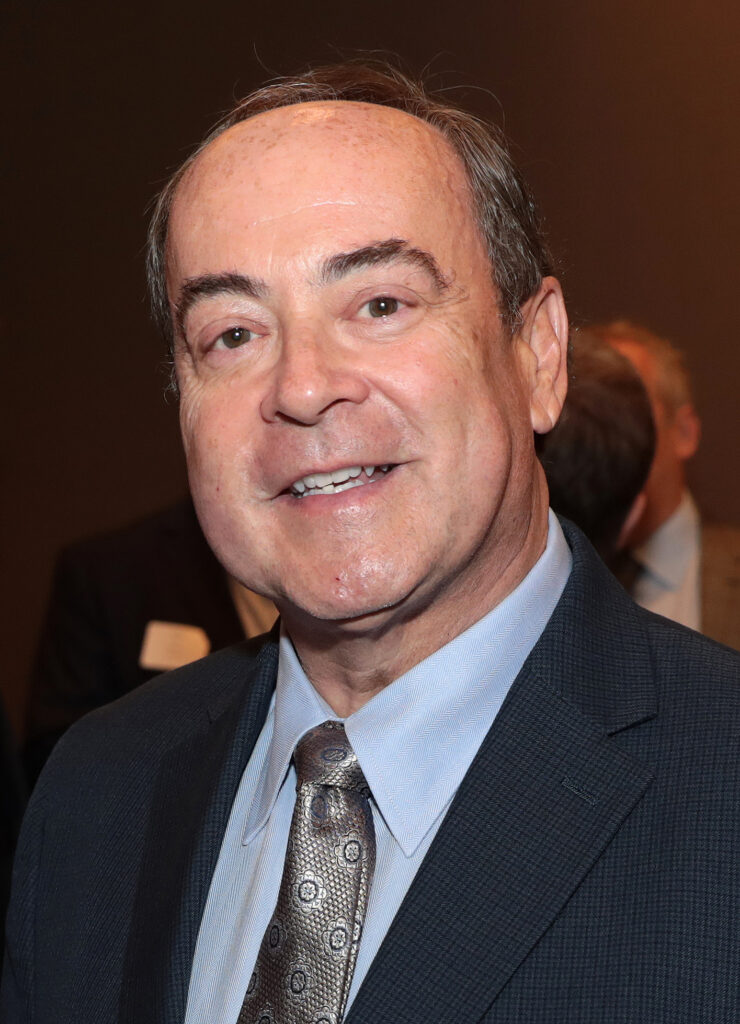
Arizona Supreme Court Justice
(Photo by Gage Skidmore,
used under CC BY-SA 3.0)
From the state legislature, Republican Sen. Rick Murphy and Rep. Debbie Lesko were also at the table. When the bill was written up, making ESA vouchers available to students with disabilities who were already in the public school system, the pair flipped a coin to decide who would get to be its lead sponsor, according to Hay.
Together with Ladner, Keller called a meeting with what he called “all the stakeholders” to hammer out a bill. Lawyer Deborah Sheasby of the Center for Arizona Policy, a campaign group that advocates for policies in line with Christian conservatism, including pro-life measures and school choice, led the drafting, Keller said. Also present, Keller said, were Clint Bolick, who had been involved in school choice legal battles since co-founding the Institute for Justice in 1991 and was then at the Goldwater Institute; and lobbyist Sydney Hay of the American Federation For Children (AFC), a national school choice campaign group then chaired by billionaire Betsy DeVos, a school choice advocate and education secretary in the first Trump administration.
Murphy won the toss, and with a Republican governor and two-thirds majorities in both houses, it passed into law with little opposition.
When it was immediately put to a legal challenge against the Blaine Amendment, the structure of the law first suggested by Justice Hurwitz helped seal the case, according to Keller.
Because the law gave parents discretion to spend their ESA funds how they wished to educate their children and did not require them to pay for private school tuition, the Court of Appeals decided, it did not violate the Blaine Amendment. ESAs were legal.
The push
Though eligibility for the ESA program began with just students with disabilities, school choice advocates sought to expand the program to all Arizona students “from the very beginning,” Keller said.
“But,” he added, “politically, you take what you can successfully get across the finish line.“
From the first law on, eligibility expansions were passed almost every year – and the state’s spending on the program grew, too.
2012
The Legislature expanded eligibility to include children attending D- and F-rated schools, foster children and students from military families.
That year, the state awarded eligible Arizona parents roughly $1.6 million.
2013
Lawmakers made targeted revisions to allowable ESA spending, including expanding college savings options.
That year, the state awarded eligible Arizona parents roughly $5.2 million.
2014
The Legislature added an eligibility pathway for students from families with a household income at or below 185% of the federal poverty level, beginning in the 2016–17 school year.
That year, the state awarded eligible Arizona parents roughly $10.2 million.
2015
Lawmakers expanded eligibility to students living on Indian reservations and to siblings of current or former ESA recipients.
That year, the state awarded eligible Arizona parents roughly $17.3 million.
2016
Multiple bills further expanded the program. One extended eligibility to children whose parents are legally blind, deaf or hard of hearing, and allowed ESA applications to be made year-round. Another extended ESA eligibility for students with disabilities through age 22.
That year, the state awarded eligible Arizona parents roughly $28.6 million.
From 2012 to 2016, program enrollment grew from 144 to 2,175 students.
Finally, in 2017, Arizona lawmakers passed a full expansion of ESA eligibility to cover all K–12 students in the state over a four-year period, starting with kindergarteners.
At the time, Republicans held a governing trifecta, controlling both legislative chambers and the governor’s office, with Doug Ducey in his first term. The bill passed the state house by two votes, winning praise from then U.S. Education Secretary DeVos, a former AFC board chair.
That 2017 expansion was never implemented.
Sitting around a kitchen table in 2017, six parents and educators launched a referendum campaign to overturn the expansion and created Save Our Schools Arizona (SOS), a nonprofit lobbying group “fighting for strong public schools” in the state.
SOS co-founder Beth Lewis said people doubted they would have much success with the initiative. “Everybody kind of patted us on the head and was like, ‘Oh, that’s very cute, little ladies, you’re going to get 100,000 signatures, in the heat, in three months, with no money and you don’t know anything about politics,’” she said.
The group was successful nonetheless, and voters supported their initiative by a nearly two-to-one margin when it came to a vote in November 2018. Universal ESA expansion was dead — for a time.
Some ESA supporters wanted it that way. Had the ballot initiative supported the law, legal experts say it would have limited the Legislature’s ability to shape the program later.
One of the ESA program’s strongest supporters, Republican Rep. Ben Toma, voted to overturn the 2017 law for this reason, saying it “would have been virtually impossible to expand” ESA eligibility in the future without success in another ballot initiative.
“We would have put massive handcuffs on ourselves,” Toma said, then continued: “That’s not even a good analogy. It’s more like tie the whole body up, in a way that you can’t even move after that.”
Instead, Toma said, he was willing to bide his time to achieve his “holy grail” of unlimited universal expansion.
Loss of trust
When COVID-19 shut down public schools for 12 months from March 2020, confidence in the system declined sharply among Republicans. In Arizona, schools were at least partially closed for a full year from March 2020, taking a punishing toll on students. Toma had two daughters in high school at the time, and he said he saw them “waste away at least a year doing nothing.”
That’s when it “crystallized” in his mind that this was the time to push for universal ESAs again, saying “there is no way universal [expansion] would have happened without COVID.”
In January 2021, Toma said, he sat down for lunch with Michael Hunter, then chief of staff of the House of Representatives and formerly of the Goldwater Institute; Josh Kredit, then deputy attorney general for law and policy and formerly of the Center for Arizona Policy; and his brother Mihai Toma, CEO of Black Mountain Investment Company.
The four discussed that year’s proposed billion-dollar contribution to public schools, a budget compromise promoted by public school advocates. As House majority leader at the time, Toma said he told the group, “If we’re going to do this, then let’s get something for it. … Why don’t we just go for universal ESAs?”
Power moves
It would take until the final weeks of the 2022 legislative session for Toma to introduce a bill to expand the ESA program eligibility to any K-12 student who could enroll in an Arizona public school. It was Ducey’s final, term-limited year in office, and he had made a big pitch for universal ESA expansion in his State of the State address that January, calling on state lawmakers to “think big and find more ways to get kids into the school of their parents’ choice.”
On June 15, just nine days before the end of the legislative session, Toma introduced a bill to remove all eligibility limits on ESA enrollment. It cleared the Ways and Means Committee that day and passed the House in a week.
This was fast, but not fast enough for the Senate, where it landed June 22. To ensure the bill could be voted on before the end of the legislative session two days later, Majority Leader Rick Gray successfully moved to suspend a rule requiring bills to be available for reading for five-days before a vote. On June 24, 2022, the Senate narrowly passed the bill on its final day in session. Ducey signed it into law two weeks later, making Arizona the first state in the country to offer universal eligibility for education savings accounts.
Republican state Sen. Joel John said the timing played a major role in the bill’s passage. Republicans were concerned about losing control of state government in that year’s elections, John said, potentially making this their last chance to pass universal expansion for the foreseeable future.
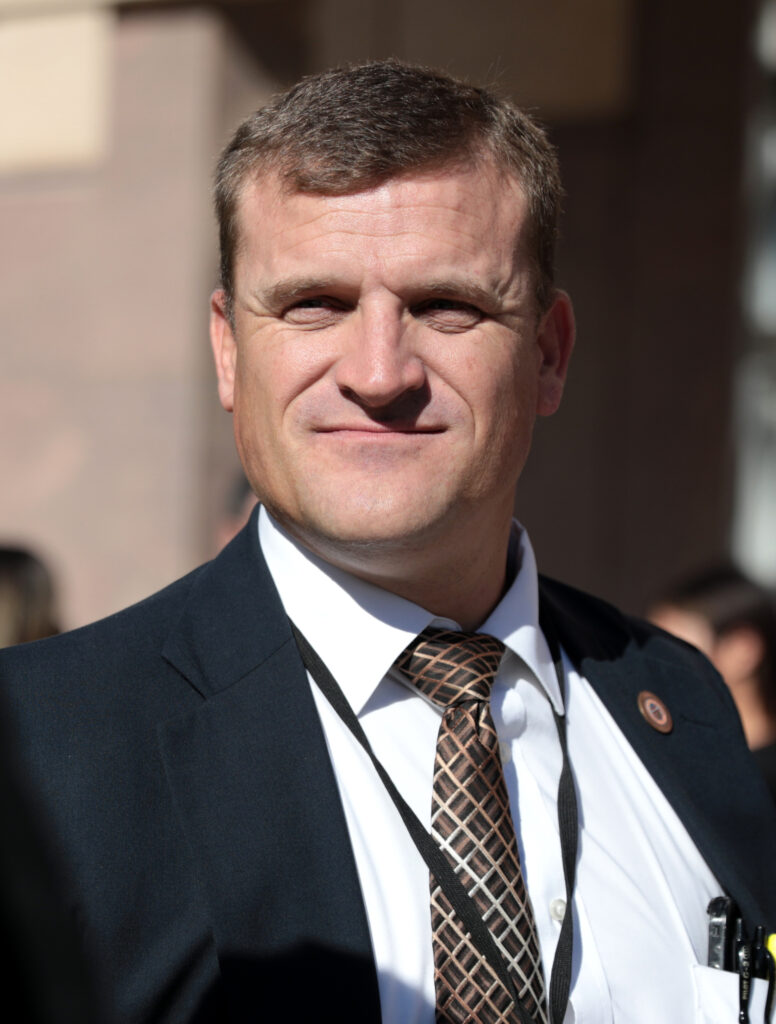
Senator Joel John
(Photo by Gage Skidmore,
used under CC BY-SA 3.0)
He was one of three senators who voted for the 2022 bill who had voted against other Republican efforts to expand the ESA program only a year before. The other two were Michelle Udall and Joanne Osborne.
In 2021 and 2022, the AFC spent hundreds of thousands of dollars in political contributions against the three Republicans. The majority was directed at Udall, who was running for state superintendent against incumbent Horne, a consistent supporter of ESAs. Some of that money went toward digital ads that claimed the elected officials had “betrayed” the Republican party by voting against school choice.
Explaining his vote for the 2022 bill, John said he was afraid of being “raked over the coals” for opposing it during his fall campaign, with the negative AFC ads in mind. John partly attributes his electoral loss that year to these ads.
Osborne and Udall also lost their campaigns in 2022. Osborne and Udall, who now works at the Arizona Department of Education, did not respond to repeated requests for comment.
John said he’s now remorseful about his vote for the bill. “I regret it as a politician, regret it as a parent, regret it as a regular citizen. I just see its negative impacts and I see how it’s being abused.”
He said Lewis, the director of SOS, warned him before the vote that the bill expanding the ESA program didn’t have enough protections against fraud and abuse. At the time, John said he didn’t believe people were going to “take advantage” of the ESA program.
“Boy, was I wrong,” John said. “Basically, it has overwhelmingly been taken advantage by people in more wealthy ZIP codes,” before recounting an interaction with a colleague who was “bragging” about the “check from the government” he received to subsidize his child’s private school tuition after the universal expansion bill passed.
“His kid had already been in private school and never attended public school, as far as I know,” John said.
The universal expansion bill removed a requirement that ESA students had to have previously attended a public or charter school. By 2025, three quarters of students on the ESA program were previously in private school or homeschooled.
Supporters of the universal expansion bill, including Toma, say it was an attempt to fix the education system in a specific way, rather than increasing public school funding. He claimed Arizona’s public schools had only gotten worse while funding increased.
“The answer seems to be, ‘we need more money.’ Well, we’ve given [public schools] more money, and it’s never enough,” Toma said. “The only thing I could come up with is competition. Introduce competition and put parents in charge.”
Looking ahead
Today, with over 100,000 students enrolled and a steady stream of headlines emerging about the vouchers’ use for non-allowed expenses like lingerie, video games and theme park trips, ESAs face increasing scrutiny.
Public school teachers continue to rail against them, and Attorney General Kris Mayes has said that parts of the program’s administration are “likely illegal.”
Yet the program — which began just 15 years ago as a small, targeted initiative to help disabled students find more tailored ways of learning — appears likely to remain largely unchanged in the coming years.
“I regret it as a politician, regret it as a parent, regret it as a regular citizen. I just see its negative impacts and I see how it’s being abused.”
— Republican state Sen. Joel John
SOS is back as part of a coalition promoting a 2026 ballot initiative to rein in ESAs. Where in 2018 they campaigned successfully for a total repeal of universal eligibility expansion, their new initiative proposes only to add “guardrails” to the program’s administration and restrict eligibility for some families who earn more than $150,000 per year.
Rodrigo Palacios, a Tempe schoolteacher and one of the initiative’s organizers, says the shift is a matter of political calculus: “The voucher system is here,” he said, “and it’s not going to go away.”
The initiative needs to collect almost two-and-a-half times as many signatures to reach the ballot this time as SOS managed in 2018 because initiatives that only seek to veto a bill require fewer signatures. It would then need a majority of the public vote come November. Even if these hurdles are overcome, Palacios admitted, passing the initiative would only “stop the bleeding” from a system that he sees as an “existential” threat to public schools.
The law’s architects are pleased. Keller, the lawyer who fought to make ESAs legal under the state constitution, says the current system is close to ideal. It “gives parents maximum freedom to choose the education that best suits their child,” he said, without imposing stringent requirements on student outcomes. “I love the program — absolutely,” concurred Hay, the longtime school choice lobbyist for AFC.
Christine Marsh, Arizona’s 2016 Teacher of the Year and a former Democratic state senator, sees it this way: “In its original genesis, having those vouchers for the special needs kids: I see the validity in that,” she said.
It’s how ESA vouchers have grown in scope and scale that concerns her. “We at the Capitol … talk about it as the camel getting its nose under the tent,” she said of advocates’ efforts at expanding the program from its limited origins: Once the camel has its nose in, the body soon follows.
It is a fitting metaphor for a state that’s mostly desert. But the movement that grew school vouchers into a major part of the education landscape in Arizona in the last two decades now has its sights set across the country.
In 2025, Congress approved a federal school voucher plan that was signed into law by President Donald Trump. The program will help families across the country pay for private school and other education expenses starting 2027.
When the law passed last year, the CEO of AFC — a group that has promoted school choice in Arizona politics since 2006 — said, “This is the biggest advancement … we’ve ever had.”