



By Evan Wyloge and Abby Jurek
The political struggle over who will lead the Arizona Department of Education has set a record this year, with the amount of money raised and spent cycle-to-date topping previous election cycles through at least 2006, signaling the high-profile nature of this statewide office.
The primary election is just days away, and more than $1 million has been spent on electioneering in the Superintendent of Public Instruction race, including $200,000 spent by an outside “independent expenditure” group on a digital ad that has embroiled the campaigns in controversy. The candidates have hundreds of thousands of dollars left in their campaign coffers to spend.
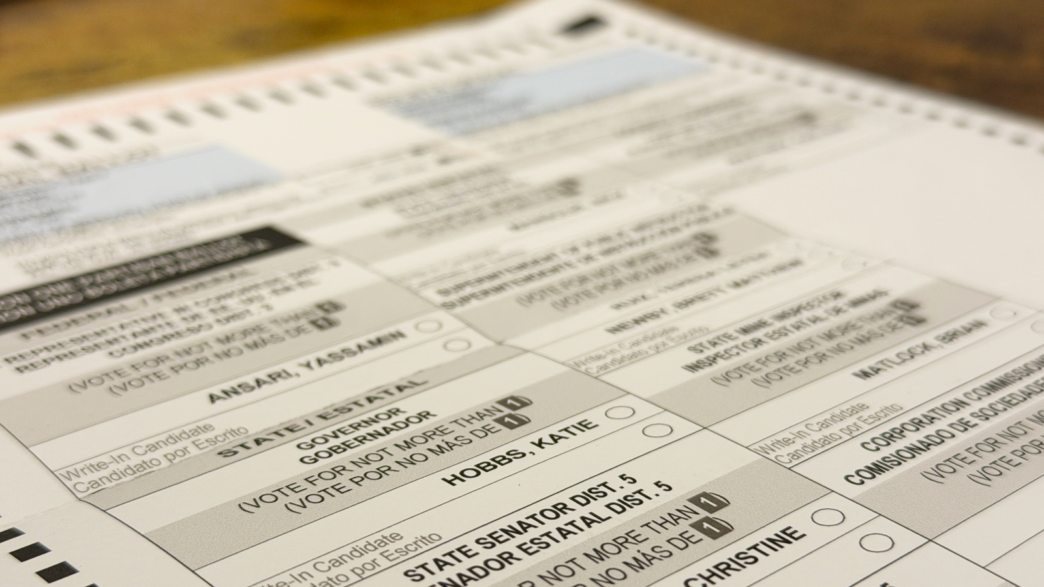
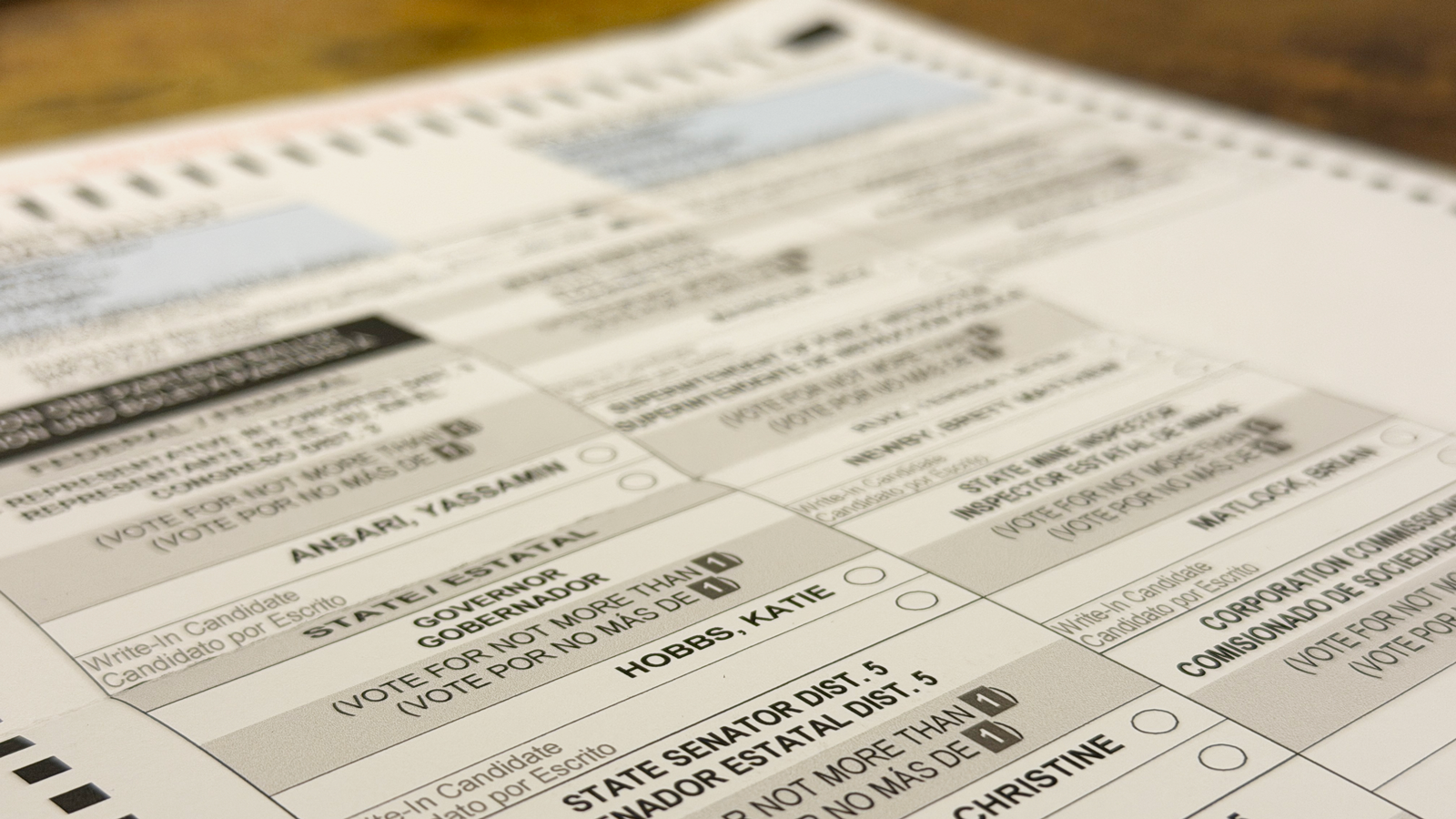
Most of the spending has centered on the Republican primary, where incumbent Tom Horne is seeking re-election, but faces a challenge from State Treasurer Kimberly Yee.
The office runs the Arizona Department of Education and oversees the state’s ESA voucher program that has grown from around 12,000 students in 2022 to more than 100,000 during the most recent school year. The agency also continues to grapple with a $3 billion school-underfunding court ruling and faces a ballot measure that could upend the voucher program.
The record-setting campaign cash reflects those stakes, as education funding and school choice has been a hotly contested topic in Arizona.
Incumbent Tom Horne leads in both income and spending.
- Horne has the biggest campaign account, with $795,000 in campaign receipts — mostly from self-funding, and $389,000 cash on hand, as of the most recent reporting period, ending June 30. His campaign reported $550,000 in spending so far.
- Yee has reported $400,000 in campaign receipts, including $144,000 rolled into her current campaign committee from her 2022 statewide campaign committee, and has $246,000 left in her campaign account, as of the same reporting deadline. She has spent $150,000.
Horne’s strategy of self-funding is not new. In his 2022 campaign, he put $786,000 into his own campaign. As he sees it, personally-funded campaigns are now the standard for Arizona’s statewide races.
“I did a lot of fundraising,” Horne told The Beam in an interview about his campaign finances. His 159 contributions from individuals add up to just above $230,000.
“In today’s world, that’s not enough for a statewide race,” he said. “So I think you’ll find that a lot of people did that — putting in personal funds.”
Horne has notable financial backing from the billionaire U-Haul heir, Mark Shoen, with $11,000 in contributions, as well as from the Barrett-Jackson car auction CEO, Craig Jackson, with $5,500 in campaign giving.
Individual contributions to statewide candidates are capped at $11,000 per four-year cycle.
Yee also has prominent financial backers, including Arizona Diamondbacks owners and longtime political financiers Randy and Earl Kendrick, with $5,500 contributions from each.
Yee took a swipe at Horne’s self-funding practices after the most recent reports, saying they signal thin support.
“The large majority of Tom Horne’s campaign funds are from his own pockets,” Yee wrote in an email to The Beam, “because he cannot raise contributions from donors who want fresh, new leadership and are overwhelmingly supporting my campaign for State Superintendent.”
When comparing only individual contributions, Yee has raised more money and from a larger number of contributors. Both Republicans were outraised in individual contributions — in both total contributions from individuals, and in the count of contributors — by one of the two Democrats running for the seat, Teresa Leyba Ruiz.
A larger number of individual contributors is typically seen as an indication of broader support, where Horne’s receipts are driven by self-funding and a smaller number of high-dollar contributors.
The struggle between the two Republicans took an ugly turn in recent weeks, when an outside group, Arizonans for Election Integrity, spent nearly $200,000 on a controversial ad, calling Yee the “empress of DEI.”
On June 25, Arizonans for Election Integrity, a California-based political action committee, received a $200,000 contribution from Conservatives for Effective Government, an Alexandria, VA-based PAC known for acting as a pass-through organization for political spending. Arizonans for Election Integrity made the ad purchase the next day. The political two-step effectively shields the source of the money, due to anonymity and delayed income reporting that can be leveraged by such groups.
Horne, in media interviews since the ad ran, disavowed it and said he was not involved with the outside group’s activity.
On the Democratic side, two candidates head into the primary, with significantly smaller fundraising and spending totals.
- Teresa Leyba Ruiz, a former teacher and former president of Glendale Community College, has raised just less than $283,000 and spent $136,000, with $146,000 cash on hand. But Ruiz’ campaign had its biggest fundraising month in June, and it has received far more small-dollar giving than any other candidate, with almost 3,200 individual contributions. Her campaign is the only one that can claim grassroots support, at least when it comes to financial support.
- Brett Newby, a mental health worker, has raised a little less than $128,000 — nearly all of which is self-funded — and has spent $18,000.