



By Katie Wilcox
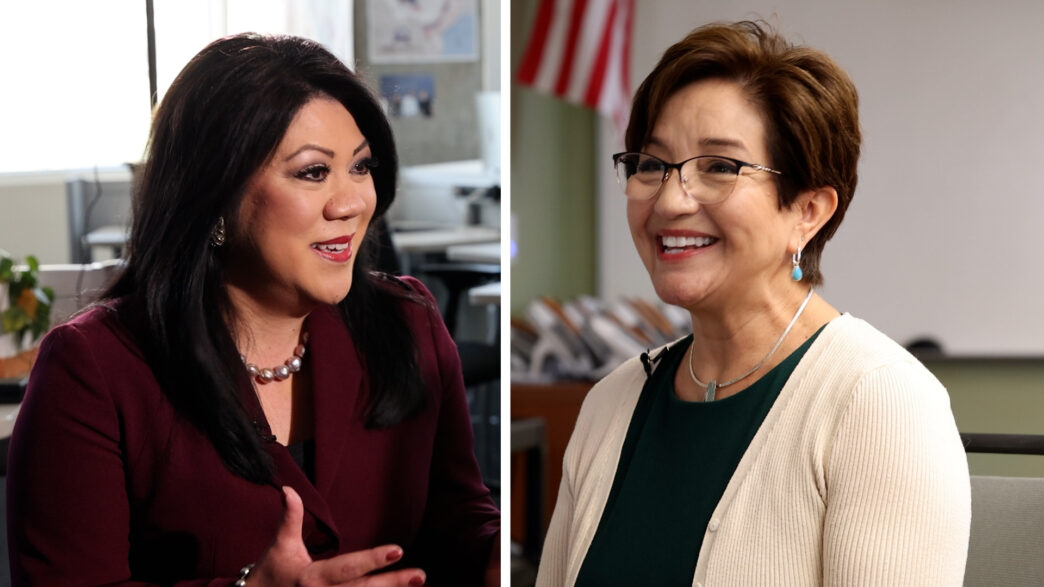
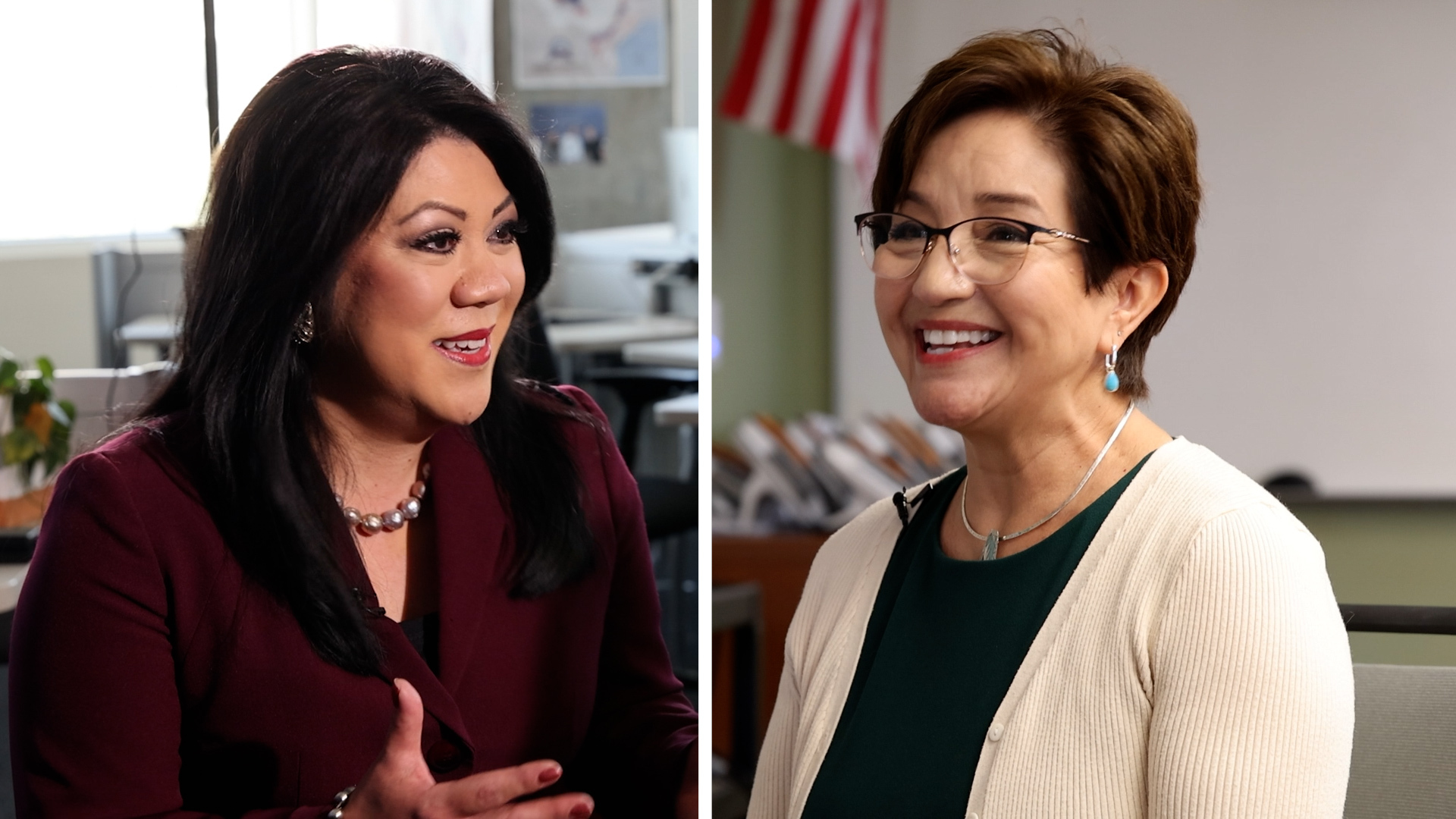
In a contentious race for Arizona superintendent of public instruction, Republican Kimberly Yee and Democrat Teresa Leyba Ruiz highlight the political divide over funding public schools and the role of Arizona’s Empowerment Scholarship Account program.
The next state superintendent faces declining enrollment, high teacher turnover, stagnating student test scores and low spending in public schools, even as the state’s universal school voucher program costs more than $1 billion a year.
As head of the Arizona Department of Education, the state superintendent will distribute billions of dollars to schools as approved by the state Legislature. The superintendent sits on the State Board of Education, the State Board for Charter Schools and the Arizona Board of Regents, shaping decisions on accountability and curriculum in K-12 and higher education.
In recent reporting, The Beam at Arizona State University exposed a widening gap between the number of public high school students who are graduating and those passing state standardized tests. The investigation found that 80% of Arizona public high school students graduated in 2025, even as 60% failed to pass the 11th-grade English language arts test and 70% failed to pass state testing in math.
This graduation-versus-skills gap is even wider for students living in poverty.
Across the state, more than 1 million students attend public schools, including charter schools. More than half qualify for free or reduced-price lunch based on household income. Nearly 100,000 students use ESAs to pay for private or homeschooling expenses.
The Education Department is responsible for administering the ESA program, which includes defining and auditing allowable parent purchases.
In one-on-one interviews with The Beam, the superintendent candidates discussed their views on what’s driving the challenges facing public schools and what needs to change to improve student outcomes.
Who are the candidates?
Republican Kimberly Yee is the Arizona state treasurer, a statewide elected position she has held since January 2019. She has spent her career in public policy, including as an education policy advisor under two California Republican governors, Pete Wilson and Arnold Schwarzenegger. The latter named Yee deputy cabinet secretary in 2004.
Yee was also elected to the Arizona State Legislature. She spent two years in the House of Representatives and six years in the state Senate, where she spent time as Senate majority leader and vice chair of its education committee.
Democrat Teresa Leyba Ruiz, who received her doctorate from Arizona State University, spent her career as an educator in the Valley. She began teaching seventh-grade math in 1990 before moving on to high school and eventually South Mountain Community College, where she continued teaching for more than a decade.
Leyba Ruiz transitioned to administration and became interim president of Glendale Community College in 2016 before taking the position permanently in 2018. In 2023, she began working for Education Forward Arizona, a nonprofit that advocates for education policy.
SCHOOL SPENDING: Arizona ranks 50th in the nation in per-student spending
For Leyba Ruiz, improving student outcomes is about increasing public school funding.
“What we’re seeing today are the consequences of 50 years of underfunding,” Leyba Ruiz said. “Having been in these schools across Arizona, we see the impact on facilities, on resources, on programs that are being eliminated — that all has an impact on our students and their future.”
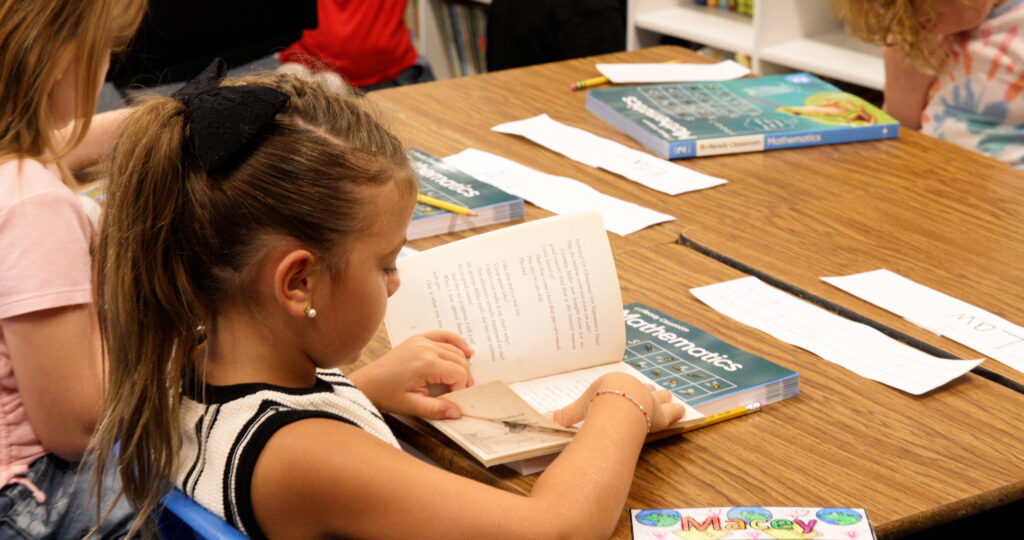
The National Education Association has released state rankings on public school funding for decades.
Since 2015, Arizona has ranked in the bottom five states in per-student spending each year. In the most recent ranking, the NEA placed Arizona 50th among the 50 states and Washington, D.C., in per-student spending.
Yee, however, told The Beam she is skeptical of the national school funding rankings and said districts need to reconsider how they spend money. She emphasized that she wants to see a greater percentage of funding go toward instructional spending.
“We have a lot of funding that gets stuck at the administrative level and that’s really where the adults are,” Yee said. “We need to bring those dollars back to the classroom.”
Yee’s comments align with the proposals in Proposition 320, a Legislature-sponsored ballot initiative that would require certain school districts to allocate at least 60% of their funding to “direct instructional expenses,” as defined by the Arizona auditor general.
The ballot measure has the support of the Goldwater Institute, a right-of-center think tank in Phoenix. Christopher Thomas, its director of legal strategy for education policy, argued in favor of the proposition during a debate held by the Citizens Clean Elections Commission in September.
Jimmy Arwood, the government relations director at the nonprofit advocacy group Arizonans for Quality Education, argued against the proposition, saying it doesn’t add funding but would punish schools by cutting teacher pay.
Leyba Ruiz said that she plans to vote no on Proposition 320.
DECLINING ENROLLMENT: School budgets shrink as students leave public schools
The Arizona Legislature passes a state budget each year, and education funding is the largest single category. School funding is calculated based on enrollment. In the latest state budget, declining enrollment resulted in a $92 million decrease in state funding, though schools received additional funding for inflation adjustments.
An Arizona School Administrators report shows that declining enrollment is due to multiple factors, including lower birth rates and families moving away or switching to private schools.
The report shows that more than 40,000 students using ESAs were previously enrolled in a district or charter school.
Yee said if schools are losing students, it is a sign that parents are dissatisfied.
“If there’s a problem there, let’s fix it,” Yee said. “Let’s fix those district schools if there is a reason for this rapidly declining enrollment, because you can’t just throw more money at a system that actually has a decreased population.”
Leyba Ruiz said schools need more funding to give students the “highest quality education possible.”
“Our schools are having to make do with less and less and less,” Leyba Ruiz said. “That’s impacting our students and performance while there’s a billion dollars being spent on another program.”
SCHOOL ACCOUNTABILITY: Arizona schools receive high letter grades despite low test scores
In July, The Beam reported that in 2025, more than half of 11th-grade students in Arizona public schools failed to meet proficiency standards in English language arts and math standardized tests. Test scores were even worse for low-income students.
Despite low proficiency scores, 53% of public high schools received A grades from the Arizona Department of Education, a concern for conservative leaders, including Superintendent Tom Horne and Republican candidate Yee.
“This is false advertising, right? Because you’re telling parents around the community, you’re an A school; yet, only less than half of your students are actually passing the tests,” Yee said. “So now we have a statewide system of misleading data and that’s something we have to stop immediately.”
The State Board of Education is revamping the A-F school letter-grade system. It voted in September to increase the percentage of students who must meet state proficiency standards for schools to receive top scores.
Leyba Ruiz said it is important for the system to evolve, but she raised concerns about tying accountability too closely to test scores.
“A standardized test is never going to be perfect,” Leyba Ruiz said. She added that the letter grades consider other important factors, including how schools help students improve.
Both candidates said that schools with more low-income students should receive additional support. But Leyba Ruiz said private schools that receive public funding should be held to the same standards.
“The only schools that are required to give the state assessment are public schools — that’s your traditional district and your charter schools,” Leyba Ruiz said. “Private schools, home schools are not required, and so there’s no way to compare.”
SCHOOL CHOICE: Private schools receive public funding, no mandated testing
“Public dollars demand public accountability,” Leyba Ruiz said, adding that the regulations for public and charter schools don’t apply to private schools that receive tax dollars through ESAs.
“None of those rules and requirements are required of our private schools and of our homeschoolers, and so if you’re going to accept public dollars, then you should have the same requirements,” Leyba Ruiz said.
Yee disagreed.
“It’s the same reason you wouldn’t have a private company report all of their tax information to the state because they’re private, right? So there is this difference,” Yee said. “That is the parent’s decision as ESA parents just determine how they educate their child, whether it’s in a home school setting or a private school setting, they should be the one to determine whether or not that school setting, or environment, meets their needs.”
Yee acknowledged that charter schools are required to test their students and do get letter grades from the state because charter schools are fully funded by the state.
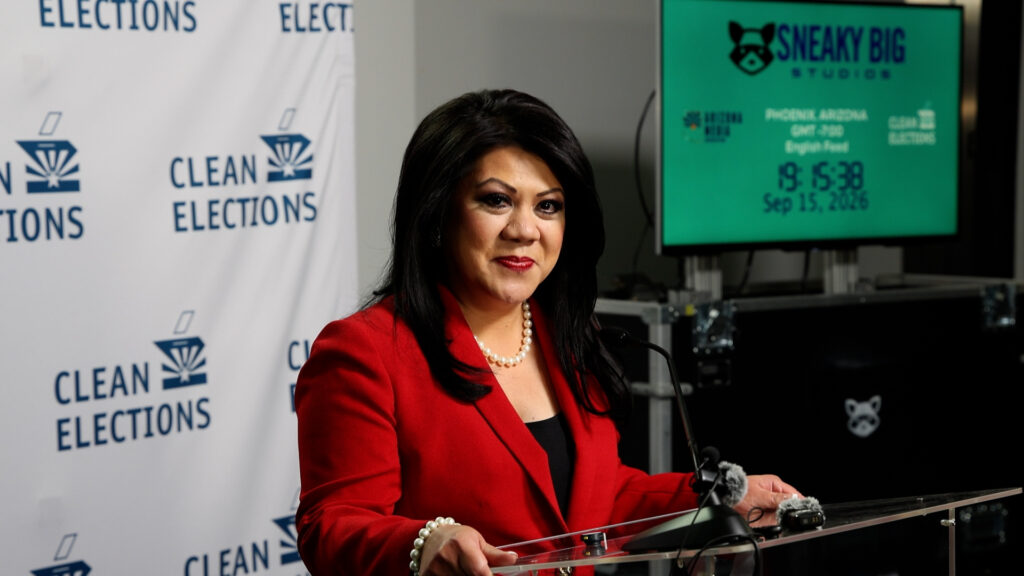
Yee said that even if all students at a private school used ESAs to pay for tuition, the school would still receive a substantial amount of private funding.
“If you take a look at it, it would never be 100% funded because the amount of funding for an ESA scholarship does not meet 100% of the need of that student’s academic year of tuition,” Yee said.
Yee said the Legislature passed the universal voucher program so that any family, regardless of income, could access the accounts.
When asked how low-income parents would pay the difference between money provided by the ESA and the full cost of education, Yee repeated for parents to have a choice.
“If a family believes that they want half of their tuition covered at a private school and they’ll make up the difference somewhere else, that’s their choice,” Yee said. “It’s not the government’s decision to make for that family.”
TRANSPARENCY AND ACCOUNTABILITY: How the candidates would administer the ESA program
Both Yee and Leyba Ruiz said they oppose the current policy that allows the Arizona Department of Education to automatically approve parent ESA expenses for less than $2,000.
Yee said she supports technology that would screen purchases at the point of sale to ensure compliance with state regulations.
Leyba Ruiz said she also wants to see a “modern, automated system” help decrease waste and misuse in the system.
Leyba Ruiz also supported a proposed ballot measure that would have allowed voters to decide whether to restrict ESAs based on a family’s income, but the Arizona Supreme Court struck down the initiative, finding the group did not gather enough qualified signatures.
Leyba Ruiz said she would make ESA spending data publicly available as an accountability measure “because taxpayers have a right to know where their money is being spent.”
As state treasurer, Yee refused to release ESA spending data to 12News, the NBC affiliate in Phoenix.
The news station sued Yee, the Treasurer’s Office, and Arizona Department of Education and Superintendent Tom Horne for the release of the records.
Horne and the Education Department settled out of court and released anonymized data for more than 5 million ESA transactions.
The State Treasurer’s Office did not settle, and Maricopa County Superior Court Judge Christopher Whitten determined Yee’s office was not responsible for administering the program or releasing information about it.
Instead, Whitten ruled that, as administrators of the program, the Education Department must pay 12News more than $100,000 in attorneys’ fees and costs associated with the public records lawsuit.
Attorneys representing the Education Department filed a motion asking the judge to reconsider the order, which was denied. On Oct. 7, Whitten confirmed his decision ordering the department to pay 12News’ legal fees.
The department has 30 days to file a notice of appeal, which would put the deadline after the November election.
The Beam asked whether Yee would commit to releasing ESA spending data if she were to become Arizona superintendent of public instruction.
“[The] number one priority would be to protect their data,” Yee said, referring to student privacy. She added there must be “transparency and accountability of where our taxpayer dollars are going.”
CAMPAIGN FINANCE: Who is supporting their campaigns?
The latest campaign finance records show the candidates have each reported more than $550,000 in campaign income this election.
Records show Yee started her campaign with a financial head start, rolling over more than $144,000 from her previous campaign for state treasurer. Leyba Ruiz made a $10,000 loan to her own campaign.
The campaign finance records show Leyba Ruiz raised nearly $250,000 from donors who contributed $500 or less. Yee’s records show she brought in far more from large donors and raised about $59,000 from those who contributed less than $500.
Among Yee’s top donors were Earl “Ken” Kendrick and his wife, Randy Kendrick, the billionaire owners of the Arizona Diamondbacks. They each contributed $5,500, the maximum an individual can contribute to a statewide candidate under Arizona law.
Randy Kendrick serves on the board of the Goldwater Institute, the organization that shaped Arizona’s ESA program and advocated for Proposition 320.
Leyba Ruiz’s latest report shows she received $5,000 from the Arizona Education Association Fund for Public Education, the political action committee for the state’s largest teachers union. She received smaller donations from other union PACs, including $1,000 from SMART PAC, representing transportation workers union, and $2,000 from Ironworkers Local 75 PAC.
CAMPAIGN COMPLAINT: Yee accused Leyba Ruiz of violating state law in posting photos after touring a school
The Beam asked both campaigns for opportunities to meet the candidates on the campaign trail or spend some time with them outside their interviews.
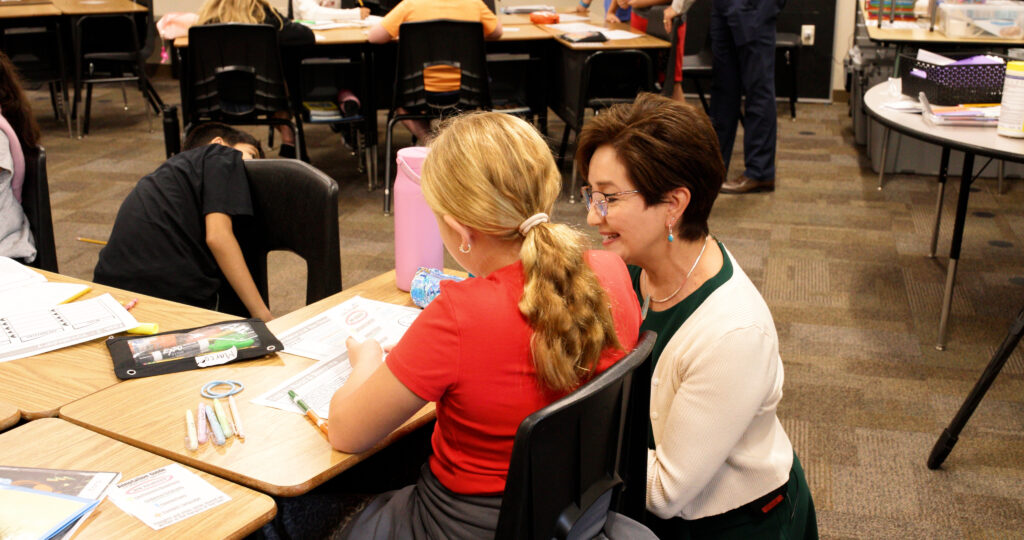
Leyba Ruiz’s campaign offered a time when she was planning to tour a local public school. The Beam met Leyba Ruiz at the Litchfield Elementary School District offices on Aug. 10, where she toured several classrooms and met with the superintendent and deputy superintendent.
Yee said that if The Beam were to join her during a school visit, it would have to be in her official capacity as treasurer. Spending time with her as a candidate on school grounds, she said, could break the law.
On Sept. 1, attorneys representing Yee sent a complaint to the Arizona attorney general. It argued that photos Leyba Ruiz took inside schools and posted to her campaign’s Facebook page showed evidence of a violation of Arizona law, which prohibits the “use of school district or charter school resources or employees to influence elections.”
Leyba Ruiz called the complaint a “baseless” and “meritless” political distraction.
The Arizona Attorney General’s Office referred the complaint to the Maricopa County Attorney’s Office. A spokesperson confirmed the county attorney’s office has an open investigation.
In a video posted to her campaign’s Facebook account announcing her run for state superintendent of public instruction, Yee is shown touring an unidentified school.