





By Ian Brown, Kindness Hyde and Lilly Roseburrough
PHOENIX — Arizona’s traditional public school districts are cutting costs as enrollment falls. But over the past six years, they have increased per-student spending on administration more than twice as fast as per-student spending on instruction, according to an analysis by The Beam, an accountability newsroom from the Howard Center for Investigative Journalism at Arizona State University, and Cronkite News.
From 2019 to 2025, across Arizona per-student administration spending, which includes administrator and clerical staff salaries and other services, increased by 16% when adjusted for inflation. During that same period, instruction spending increased just 7%.
These changes have occurred even while total student enrollment has declined 6% in Arizona’s traditional public schools.
Many of the state’s largest public school districts are seeing a rise in administration spending while instruction spending either falls or fails to keep pace.
Gilbert Public Schools reflects that trend: Per-student administration spending increased 19% from 2019 to 2025, while per-student instruction spending increased 6%, according to an analysis by The Beam, which adjusted for inflation spending data released by the Arizona Auditor General.
Dawn Mackay, chief communications and community engagement officer for Gilbert Public Schools, declined to address the analysis directly. Mackay said, while commenting generally, a shift in the district’s instruction-versus-administrative spending is a result of “right-sizing” the district while the number of students attending falls. “As enrollment declines, fewer instructional staff are required to meet the needs of students, while maintaining adequate class sizes and ensuring student focus is consistently resourced,” Mackay said.
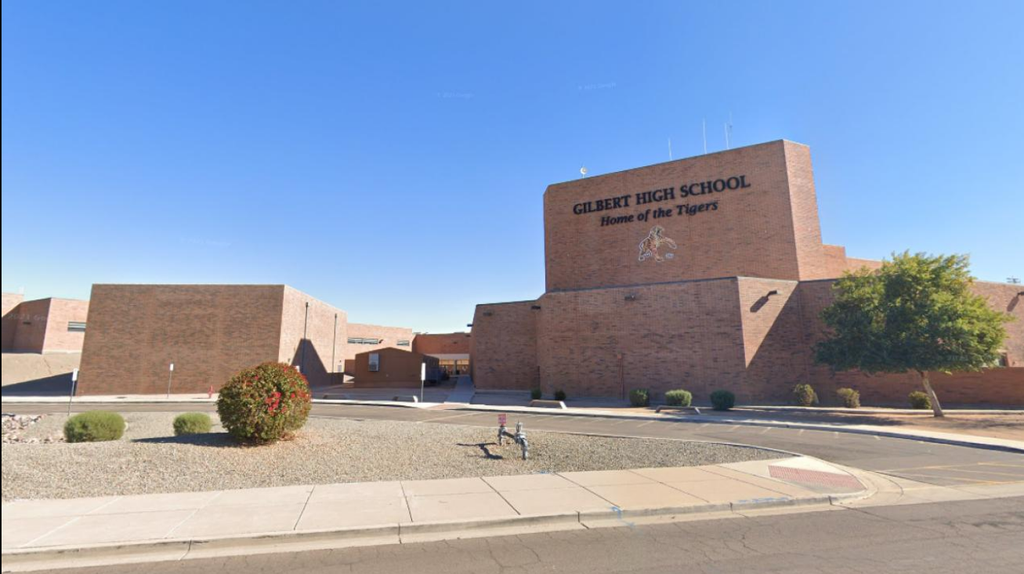
Gilbert has seen student population decline in the district by 9.6% since 2020, or more than 3,000 students. Mackay said the district has worked to keep class sizes steady, even while student enrollment declines.
As Gilbert adjusts to changing in-classroom requirements, “essential administrative positions” –– such as principals, attendance officers, payroll, human resources and safety personnel –– “provide core operational oversight and ensure strict compliance with federal and state statutory mandates that cannot be scaled down linearly as enrollment changes,” Mackay said.
While necessary administration positions are fixed, the costs associated have grown in the district. Former Superintendent Shane McCord saw his salary rise from $210,583 in 2020 to $240,000 in 2025. McCord retired at the end of the 2025-26 school year.
That is a raise of more than $29,000 in base pay in just five years. For context, the average teacher salary at Gilbert Public Schools rose only from $57,164 in 2019 to $62,926 in 2025, a raise of just under $6,000 in six years.
Chandler Unified School District –– which saw a similar 20% increase in per-student administration spending compared with a 4% rise in per-student instruction spending –– did not respond to phone calls and emails to the district or school board.
Under state law, funding for public school districts is determined through a formula based on student population. This means that shrinking populations can lead to lower budgets.
Large districts like Gilbert are not alone in facing this pressure. While most districts in the state feel budgetary strains, the smallest districts can be the least equipped to respond and adapt.
Peter Boyle, senior director for education at the Center for the Future of Arizona, said instruction costs follow enrollment figures. Administration costs, on the other hand, are often fixed.
This dynamic “definitionally would have a bigger impact on a smaller district than on a larger one,” Boyle said.
Antelope Union High School District, east of Yuma, is one of those districts. Per-student administration spending grew 41% while per-student instruction spending decreased 5% from 2019 to 2025.
In order to reduce spending, Antelope Union cut its universal free meal program. The move was meant to help the district return to budget compliance after being declared insolvent and placed under state receivership in June 2023.
The receivership was a result of six years of budget overspending and nearly $1.5 million in debt at the peak of the district’s borrowing, according to a report from the receiver to the Arizona State Board of Education. The district of about 190 students remains at high risk despite attempts to stay within its budget.
Antelope Union had to make a financial improvement plan as a condition of the receivership. That plan, submitted to the education board, eliminated a program that previously provided free meals to all students in a district where the vast majority of children come from families with financial challenges. In the 2025-26 school year, 74% of district students qualified for free or reduced-priced meals.
The move to end free meals for all students was forecast to save between $15,000 and $20,000 in the first year after adoption.
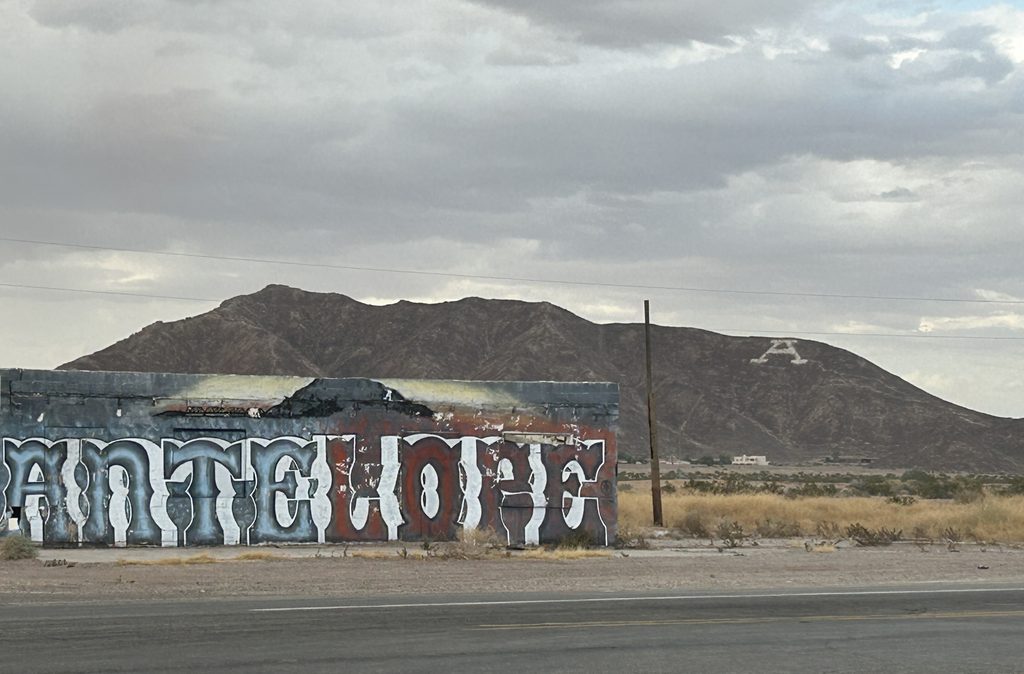
From 2023 to 2025, total administration spending in the district increased from $249,000 to $306,000. Amid cuts to other expenses, district superintendent and acting principal Michael Deiana was hired in 2024 with a base salary $4,000 higher than the previous superintendent’s salary.
Deiana said the district does not deny students lunches and is currently trying to find either donors or other solutions that might support fully funding a school meal program.
Three years after cuts to the meal program were implemented, by April, the program was so underused that the district told parents it was in danger of being cut further if more students did not participate.
“This year, we have a significant decrease in the number of meals being served, which raises concerns for both student nutrition and the long-term sustainability of our cafeteria program,” an announcement from Deiana to parents said.
When asked in September for any updates, Deiana said he plans to present a six-year strategic plan to the school board in November but did not detail any changes to the meal program’s status.
The district has worked to move beyond recent financial difficulties. Antelope Union plans to apply for an exit from state receivership in December and is developing and implementing long-term budget and facility maintenance plans.
Beyond the meal program, the district has also made tough decisions on its curriculum offerings and staffing for the administration office, where positions were cut from six to five.
“I’m bare bones. I don’t know what else to cut.”
Principal Barrie Muzbeck Pinto
Fountain Hills High School
Not everyone is happy with the direction of the district.
When Andrew Wolford moved his family from Phoenix to Yuma County in 2023, he did not think he would have to find a new school for his son twice. His son had an individualized education program because of his learning disability, and Wolford wanted to find a good place for him to finish school. The auto mechanic, having moved for a lower cost of living, placed his son in the local public schools: Wellton Elementary for middle school and eventually Antelope Union High School.
The challenges and lack of opportunities his son faced in the district forced the Wolfords to remove their son from Antelope Union and enroll him in an online charter school in the middle of the year.
“The biggest problem is this year when they started to take away certain electives out of the system, and these were all electives that were pretty much self-expression for the kids,” Wolford said. “So you got music, you got art, things of that nature that are just gone, and it pretty much just revolved around sports. Well, some kids can’t play sports.”
Wolford did not feel his son’s needs were being met by the cash-strapped district.
“He needed more individualized help, and they [the district] said that they’re doing all that they can offer,” Wolford said. He said the district has lost track of its priorities across the board.
The number of students attending public schools is not directly under a district’s control. Boyle, of the Center for the Future of Arizona, pointed to the role of decision-makers in affecting student outcomes.
“The district is largely responsible and able to impact in positive or negative ways what achievement outcomes are, but there are lots of other factors too,” Boyle said. “And the same, I think, would apply to budgets. So systemic problems require systemic solutions.”
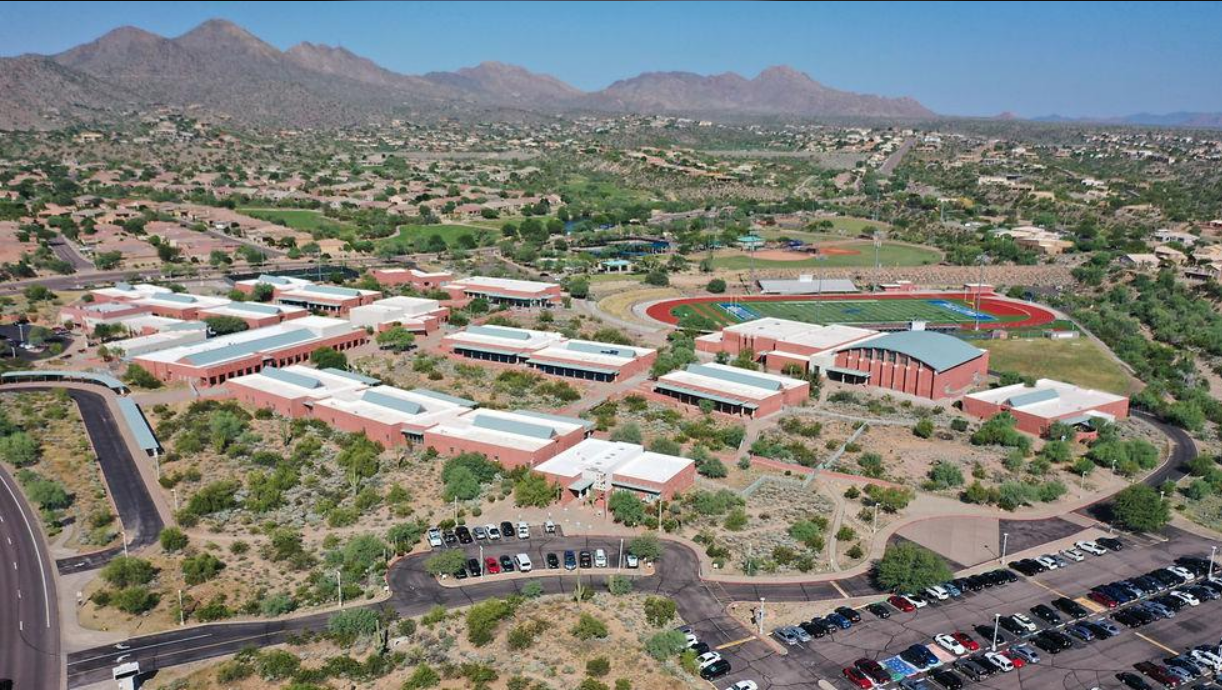
Fountain Hills Unified School District, district of about 1,000 students, saw a decline in enrollment of more than 300, losing more than a quarter of its student population in the past six years. In that time, per-student instruction spending increased 35% while administration spending increased 45%. To cope with this decline in attendance, the district eliminated eight teachers, two instructional aides and a security guard for the 2026-27 school year.
Fountain Hills High School Principal Barrie Muzbeck Pinto shared concerns about the potential for further cuts next year.
“I’m bare bones,” Muzbeck Pinto said. “I don’t know what else to cut.”
In 2018, the superintendent position at Fountain Hills school district paid a base salary of $111,000. By 2025, the position’s base salary had increased by 26%, including an $11,850 raise for former district superintendent Cain Jagodzinski between fiscal years 2024-25 and 2025-26. Jagodzinski retired from the position after the 2025-26 school year.
“I know the reports show that [administration spending is up], but I also feel that there’s not much left else to cut,” Jagodzinski said. “Because then if you do, no one is watching all these different things that need to be done.”
Jagodzinski also noted increases to his own salary are intentionally tied to raises for the district’s teachers.
“What I did is put in my contract that if teachers get an increase, then I get an increase,” Jagodzinski said.
According to Arizona Department of Education reports, the district’s average teacher salary increased 21% to $68,000 in 2024, before falling to $61,000 in 2025. Jagodzinski said that in smaller school districts, it can be harder to cut administrative expenses.
“That’s because we still have to get everything done that needs to get done in comparison to what we have for our teaching staff,” Jagodzinski said.
While the district has not made cuts to academic programs or extracurriculars offered through the schools, standardized test passing rates have declined since state testing standards were revised in 2022. The percentage of students passing the state math exam in the district fell from 35% in 2022 to 28% in 2025, while those passing the English language arts exam went from 47% to 42% during that period.
These rates are not far off from statewide results in 2025. For students in traditional public schools, 33% were passing in math and 40% in English language arts.
Despite budget constraints, the district has sought to encourage student success and expand opportunities by offering free access to college-credit courses and senior internships.
While Fountain Hills school district searches for ways to do more with less, there may not be a one-size-fits-all solution that works statewide for large and small districts alike.
Public opinion polling from Education Forward Arizona suggests investment in career and technical education as one area that many Arizonans support.
For Wolford, his son’s lack of access to these types of career-enabling skills is yet another reason he pulled his son out.
“He wanted to do welding or auto, and they threw him in cooking. They put him wherever they could fit him and he had no real choice,” Wolford said.
This story was produced by students in the Howard Center for Investigative Journalism at Arizona State University’s Walter Cronkite School of Journalism and Mass Communication, an initiative of the Scripps Howard Foundation in honor of the late news industry executive and pioneer Roy W. Howard.