



This story marks the launch of The Beam’s new Washington bureau, expanding our Arizona-based investigative newsroom to the nation’s capital. The D.C. bureau will produce original investigations, political insight and sharp analysis, testing official narratives and conventional wisdom against the evidence — and challenging them when the facts demand it. The Beam will maintain its strong local Arizona newsroom, while our Washington bureau will have a national focus on politics, space, technology and education.
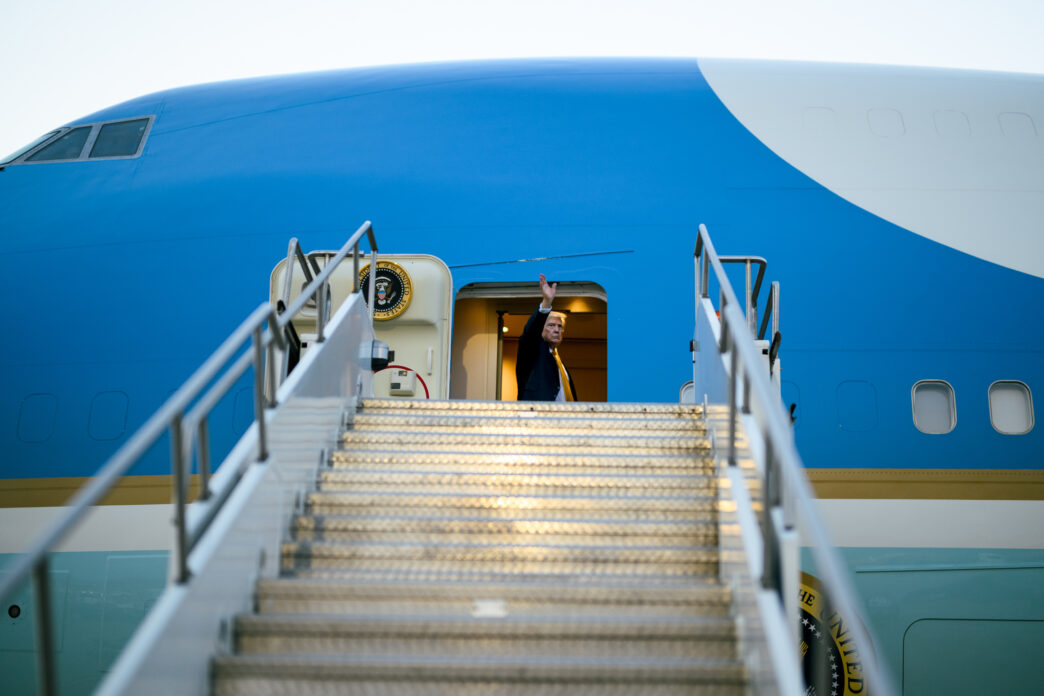
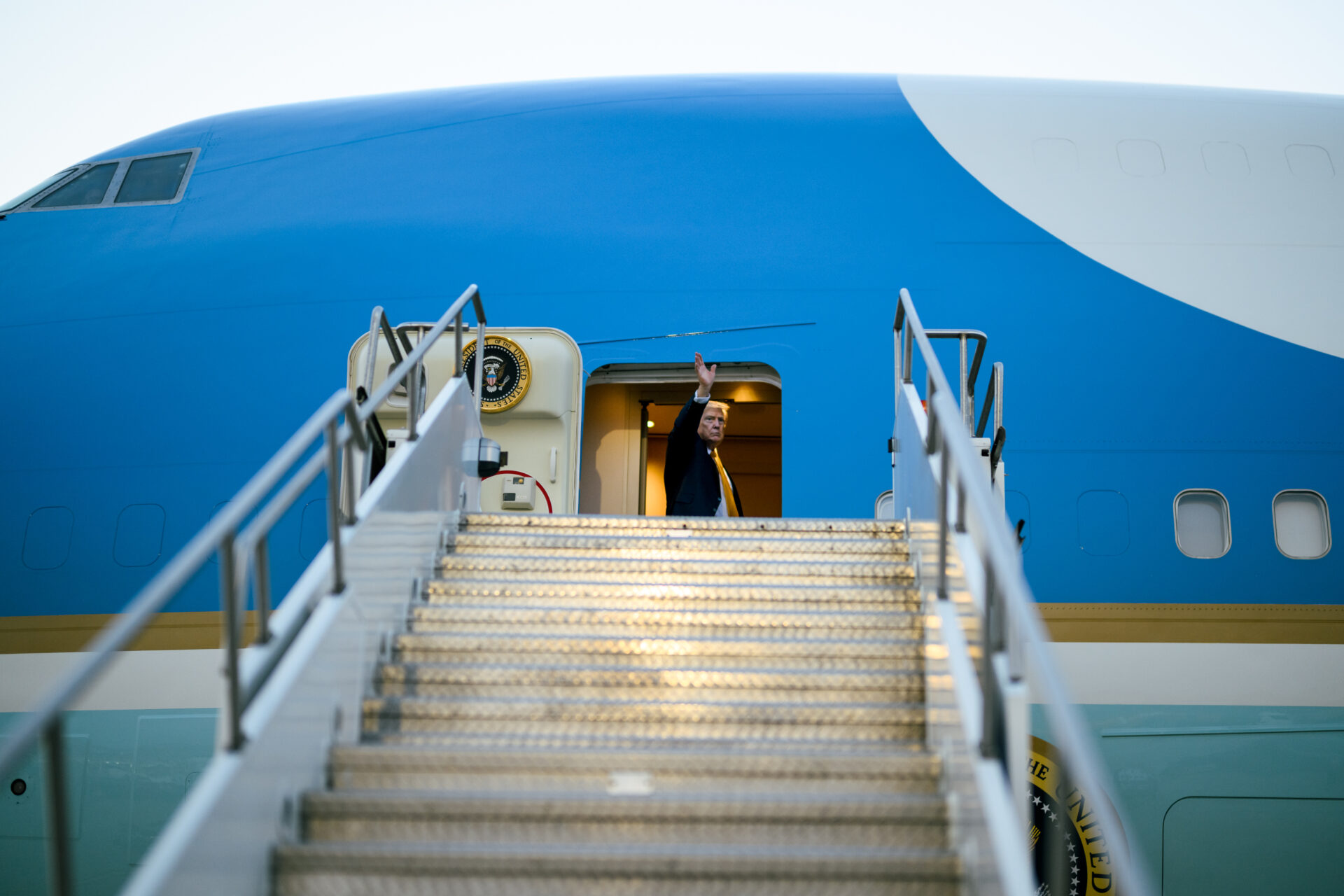
WASHINGTON – If there’s anything the White House press corps hates besides being lied to, it’s being left behind. Hence the initial fallout from President Donald Trump’s ruse at the NATO summit in Turkey, when he snuck off Air Force One in a catering truck and secretly flew off in another plane.
But that was over a month ago. Everyone got home safe. If journalists were used as decoys, so were high-ranking cabinet members who remained on the 747 Trump had boarded in plain sight.
So why, you might wonder, is this such a big deal? Why shouldn’t ordinary Americans just roll their eyes at the latest inside-the-Beltway controversy?
Let’s try to decode what’s going on, explore some implications of the operation and the secrecy the White House maintained for weeks afterwards, and spotlight open questions that help explain why the story has legs – and why you should care.
First, Air Force One has been a symbol of American strength for decades. The thought of a president hiding in a catering truck – on an ally’s tarmac – projects vulnerability, not supremacy.
The ruse reveals fear at the highest levels of government that Iran’s drone or missile technology has made it unsafe for the president to fly his own plane. That’s a propaganda win for Tehran, at minimum.
Ditching the 13-member press pool, along with two cabinet secretaries and dozens of aides and Secret Service agents, turned the passengers aboard the 747 known as Air Force One into decoys.
Concealing Trump’s absence from the 747 for a month was like pouring lighter fluid on kindling. All that was missing was a spark, which the Washington Post provided when it broke the news of his clandestine escape from Ankara.
The next day, Trump downplayed the narrative that he’d used the press corps and others as human shields.
“I think actually the plane that I flew on was at greater risk … because that would be the plane I think that they would be more likely to go for,” he said Aug. 11.
That would make sense – if Iran and other adversaries knew Trump had switched planes. But how could they? Hardly anyone onboard was even aware that “Mogul” – the president’s Secret Service code name – had swapped planes apart from Secretary of State Marco Rubio and Treasury Secretary Scott Bessent, who are fourth and fifth in the line of succession.
That’s another key ingredient in a D.C. scandal: Inconsistent explanations.
The White House press office declined to answer numerous specific questions about the ruse, the decision to keep the deception secret long after the threat passed, and related issues.
Those of us who have flown on Air Force One are acutely aware that because the president is a target, we are too. We also know it’s a flying fortress, and the security bubble that keeps him safe also protects us.
I flew that jet dozens of times with every president since Bill Clinton, as a reporter and later Washington Bureau Chief for The Dallas Morning News. From the Golden Gate to downtown Chicago, Galveston and rural Kentucky, I have been an aerial decoy of sorts aboard Ospreys and Nighthawks escorting Marine One.
Unlike the hastily-retrofitted luxury jet gifted to Trump by Qatar, the older 747 Air Force One was customized from the outset for presidential travel, with secure communications, a surgical suite, systems to track heat-seeking missiles and jam them with lasers, and pods that can blind enemy radar.
It’s hardened against electromagnetic pulse so it can remain a command center even after a nuclear blast – all of which is far more robust than the smaller C-32A Trump flew, the military version of a Boeing 757.
Both planes had fighter escorts from Turkey to RAF Mildenhall in the U.K., where Trump – extending the ruse – secretly got back on the 747 and deplaned as if he’d been aboard all along.
There’s no reason to think the Air Force and Secret Service let down their guard just because the president wasn’t aboard. Still, the need to covertly move the commander-in-chief suggests U.S. officials viewed a decapitation strike by Iran as plausible.
How plausible has been a topic of intense speculation in the days since the exfiltration by catering truck came to light. Even a low-risk threat that would entail a high cost can justify extreme countermeasures.
A ceasefire was teetering at the time. Shortly before leaving Turkey, Trump declared the truce “over” and called Iran’s leaders “scum.” Iran’s desire to strike such a blow is no surprise; the possibility they could actually do so, however, contradicts the administration’s boasts.
Four weeks earlier, Trump had declared that Iran’s military was “totally destroyed.”
Two months before that, on April 8, Defense Secretary Pete Hegseth – ostensibly the senior official aboard the C-32A – asserted that the U.S. had “decimated Iran’s military and rendered it combat ineffective for years to come.”
Hubris – another ingredient.
The deception would have been harder to pull off if members of the Pentagon press corps were on the defense secretary’s plane. But Hegseth has largely abandoned that tradition.
Now let’s shift to the real heart of any D.C. scandal: lack of veracity.
Trump’s staged disembarkation at RAF Mildenhall went beyond misdirection. It was outright fabrication.
Trump arrived in Turkey on the Qatar-gifted jet. Shortly before leaving, he announced on Truth Social that “for old time’s sake, we’ll be taking the former Air Force One, from Turkey to Mildenhall.”
The White House reinforced the deception with social media posts that remain online.
The first X post at 2:20 p.m. on July 8 showed Trump waving from the doorway of the older 747. “President Donald J. Trump is wheels up following another packed and successful NATO summit in Turkey,” it read. Just over four hours later, the White House posted a photo of Trump deplaning from the older 747 at Mildenhall, with the description: “President Donald J. Trump lands at RAF Mildenhall in England aboard the former Air Force One before departing back to the United States.”
Back on the Qatari jet for the final leg to Joint Base Andrews, Trump alluded to a shoot-down threat as the real reason for the plane swap – and kept up the pretense by saying he and the press corps faced the same peril on the flight from Turkey: “If I go, you go.”
The explanation Trump gave for the plane swap on Truth Social, that he sent the “truly spectacular” Qatari jet ahead to Mildenhall so U.S. troops stationed could have a look, rang hollow. It didn’t take long for The New York Times to report that security concerns about that jet prompted the swap.
Within days, federal prosecutors subpoenaed Times reporters in a hunt for confidential sources. The moves, later dropped under pressure from a judge, further perpetuated the deception.
Presidents have kept their whereabouts quiet for security reasons plenty of times, and the trusted travelers in the White House press corps have invariably exercised discretion on operational details.
Barack Obama brought a press pool along for two secret trips to Afghanistan in 2010. So did George W. Bush when he made a surprise Thanksgiving visit to troops in Iraq in 2003.
Each time, reporters agreed to refrain from reporting anything until the president was safely out of the war zone.
Bill Clinton played a three-aircraft shell game to fly from India to Pakistan in 2000. He flew separately from the press. But aides kept the White House Correspondents’ Association president, Susan Page of USA Today, looped in. And press secretary Joe Lockhart vetoed a ruse of the sort Trump used on grounds that would be misleading.
In February 2023, roughly a year after Russia invaded Ukraine, a print reporter and a photojournalist chosen by the WHCA joined Joe Biden for a secret flight to Poland followed by a risky 10-hour train ride to Kyiv.
As the print representative on the WHCA board – my service spanned three presidencies – I had gamed out scenarios for such trips with then-president Tamara Keith of NPR. The writer-photographer duo was the best option when there wasn’t room for a TV crew and all the wire services. Tam was the only one looped in when the time came, apart from the two intrepid travelers.
All of which adds yet another explanation for why this story has legs inside the Beltway: The press corps rightly feels misled.
The White House put out overtly false information about the president’s whereabouts. Not just misdirection or omission. The press corps unwittingly served as a conduit for false information.
Literal fake news, uncorrected by the White House until The Post’s scoop.
Let’s review:
- Despite boasts that Iran was defanged, top U.S officials deemed a threat to shoot down the president’s plane – a thousand miles from Tehran – credible enough to justify spiriting him away secretly.
- The White House peddled false information and refrained from correcting it long after any threat faded.
- As drone and missile technology improve, Air Force One could be more vulnerable than generally understood.
This is about way more than bruised journalistic egos.