





By Alice Driver
PHOENIX – At an age when most kids are learning long division, some Arizona students are learning high-tech methods to manufacture weapons, according to an investigation from The Beam, a new statewide accountability newsroom from the Howard Center for Investigative Journalism at Arizona State University.
In April 2025, a group of seventh-grade girls at Casteel Junior High in Queen Creek, Arizona, saw a boy playing with a knife in class.
“I showed my buddy my 3D-printed switchblade,” the boy said, according to the school incident report. He later told administrators that he had printed the switchblade because he was bored after his parents took away his Spotify account.
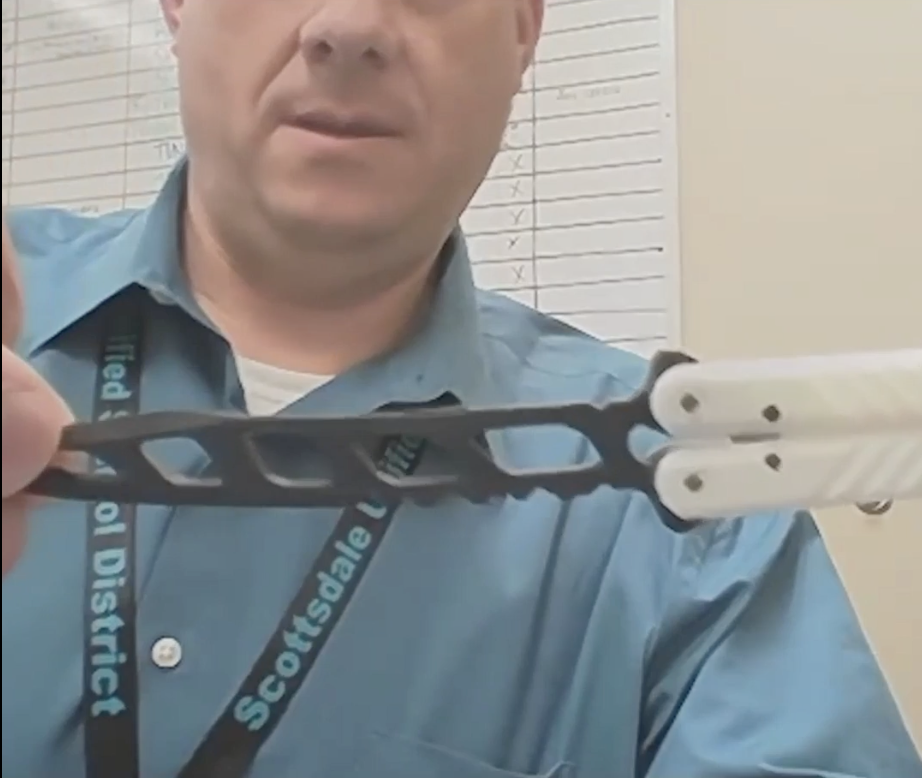
That same month, two similar incidents happened in Scottsdale schools, according to district records. A fifth-grader brought a 3D-printed butterfly knife, a type of folding pocketknife, to his elementary school campus. It’s one of the youngest reported cases The Beam identified in a review of nationwide media reports.
Three days later, at a Scottsdale middle school, a gifted student in the sixth grade was found, according to district records, “in possession of a 3D-printed item that resembled both a boxcutter and a gun, a very small plastic toy knife, and a bag of 3D-printed items.” The student also had “a large amount of cash due to selling on campus.”
Together, the cases reveal an emerging gap in school safety: As 3D printers get cheaper and downloadable printing files are easier to access, kids as young as 10 years old can manufacture objects that look like — and can sometimes function as — weapons at home and bring them to school. Administrators are left to decide, often in real time, what to call the objects, how to discipline students and what, if anything, to tell families. In these cases, none of the districts alerted the wider school community.
No one was hurt in the Valley incidents reviewed by The Beam — but not because 3D-printed objects are unable to cause harm. When experts look at cases like this, they warn that even a blunt polymer knife can be strong enough to “thrust it into the body of a child,” said Frank Grosspietsch at Safer Schools Together, an organization that provides violence prevention training to schools.
“A polymer knife can cause significant grievous bodily harm.”
– Frank Grosspietsch with Safer Schools Together
Experts say schools need clear policies for a problem that’s moving faster than most school safety playbooks.
“School leaders need to be consistent with their district policies as to how they view 3D weapons as an actual weapon, and what disciplinary action and referrals to law enforcement should be made when encountering students with such weapons,” said Kenneth Trump, president of National School Safety and Security Services.
“Our kids are exposed at younger and younger ages to the dark sides of the digital world,” he added, “and, unfortunately, to the world of violence and safety risks.”
Is it a toy or a weapon?
Many schools have policies banning weapons on campus. If a student had brought “a gun or even a simulated gun” onto school grounds, there would have been greater consequences, said Joshua Friedman, Scottsdale Unified School District’s director of safety and security.
“We had a water gun last week or two weeks ago, we had a Nerf gun last week,” he told The Beam in a Zoom interview. “We bring the SROs [School Resource Officer] in, you know, and then we send a letter home to parents that one was identified.”
But enforcement of such school policies depends if the object is classified as a weapon.
While Friedman said the 3D-printed weapons incidents were “never even brought to our attention last year,” he noted that a school safety officer looked over the items at each school to determine how to classify them.
Friedman said, “The police interviewed parents of both children along with the administrators at the sites. Everybody was interviewed.” But these interviews were not included in the incident files provided to The Beam through the public records request.
“They determined that even though it looked like a butterfly knife and functioned like a butterfly knife that it would not classify as a weapon because it did not have any other characteristics of a weapon,” he said of the incident involving the fifth-grader.
He “believed he was printing a cool fidget spinner that he could use to flip around and whatever.”
Regarding the object that looked like a boxcutter and a gun, emails obtained through a public records request by The Beam reveal how the item came to be classified.
“The item could be classified as a ‘simulated firearm’ in the SUSD Code of Conduct, but I am going with ‘Dangerous Items’ (which includes simulated knives) as that results in a lesser consequence,” the principal wrote to the student’s parent.
“I don’t think there was anything that he felt that he was printing that was bad,” Friedman said.
Scottsdale parents were seemingly not notified about the 3D-printed, weapon-like items on its campuses because “they’re not declared as weapons,” Friedman said.
Scottsdale records also included a sparsely populated spreadsheet that did not include school names or the grades of the students involved. Friedman was able to share the grade levels of the students, but administrators refused to share the school names.
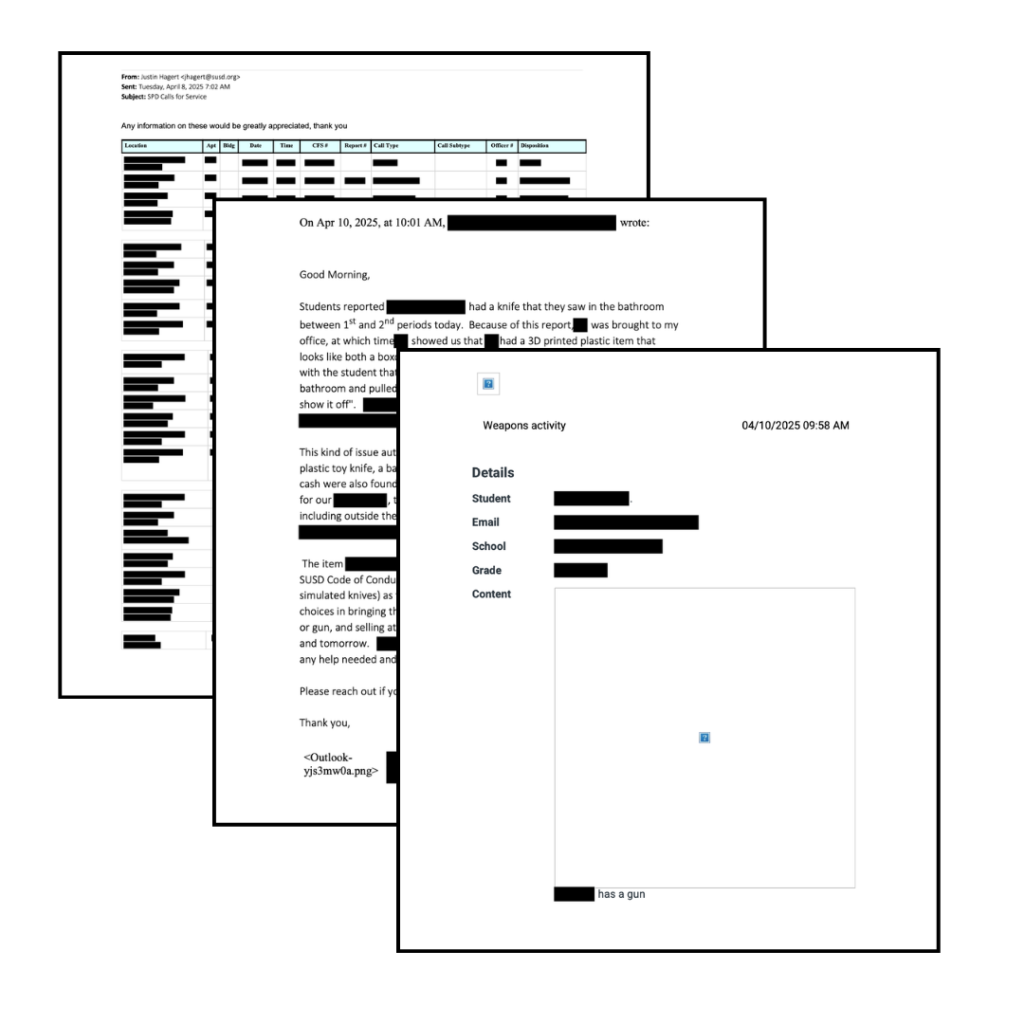
“We cannot identify the school names and/or locations due to the potential to expose personally identifiable student information,” said Scottsdale communications director Kristine Harrington in an email.
Administrators initially agreed to provide more information about the incidents, including photos of the confiscated 3D-printed weapons and contact information for the school resource officer.
But repeated attempts at phone calls and emails went unanswered.
So The Beam reached out to Scottsdale Police directly. Sgt. Allison Sempsis wrote, “I can tell you that this is still not a police matter, as there is no gun involved. It does not meet the legal definition of what a gun is per ARS statute.”
Friedman said it was not a weapon but conceded, “I mean, you could scrape down the plastic and make the knife sharper, if you know what I mean.”
In Scottsdale, administrators suspended the fifth-grader for a day and a half and the sixth-grader for two days. Friedman said the sixth-grader was also required to give a PowerPoint presentation to staff on the dangers of 3D-printed weapons and write a paper summarizing responses.
The parents of the involved kids were given the option to keep the 3D-printed object, so long as their child knew, “Just don’t bring it back to school,” Friedman said.
How is social media influencing kids who want a 3D-printed
weapon?
While school officials in Scottsdale and Chandler identified the 3D-printed objects as nonfunctional or as toys, and therefore outside the scope of school weapons policies, TikTok and YouTube tell a different story. Those popular social media apps have countless videos with kids of all ages using a range of 3D-printed weapons to cut, slash and explode things.
In “How Dangerous are 3D Printed Weapons?” a YouTuber with over 1.6 million subscribers smashes a watermelon with 3D-printed brass knuckles.
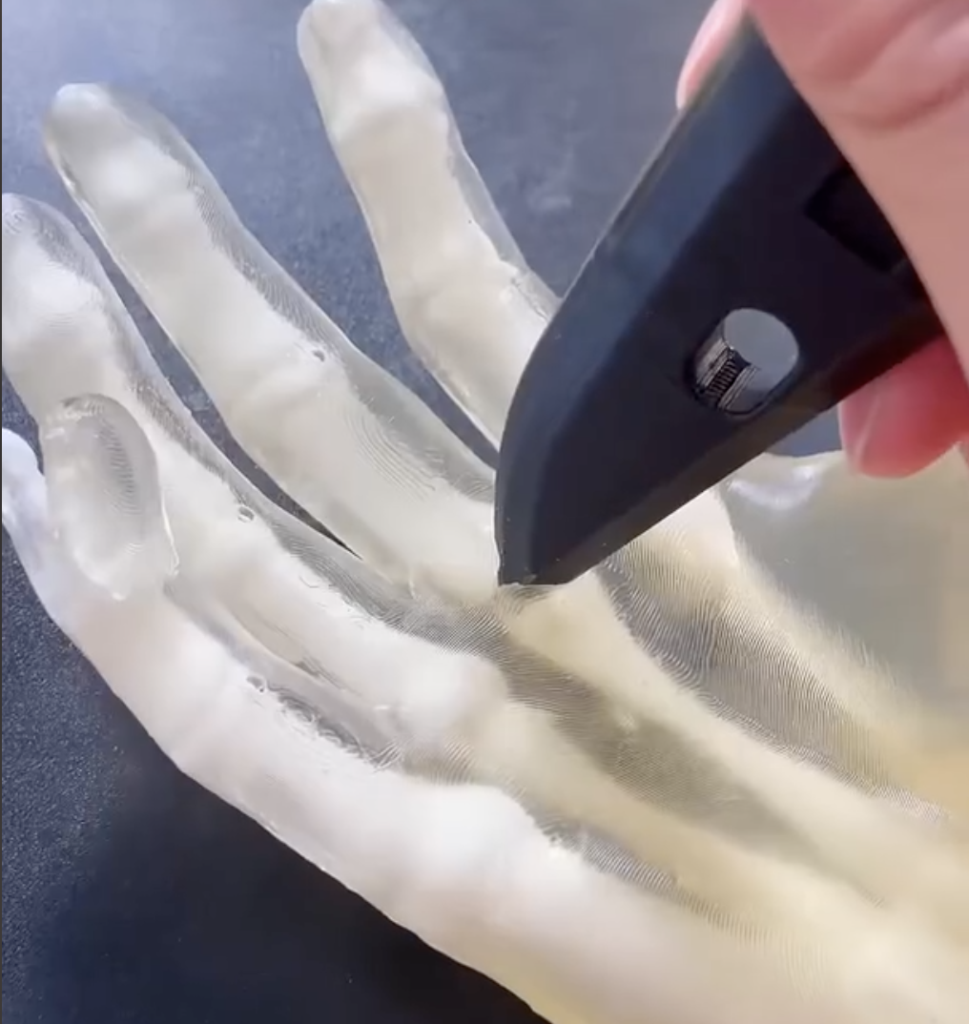
“After taking a few more swings at the watermelon, I can say spiked knuckles are definitely dangerous,” the kid says. The video then cuts to him using a 3D-printed bayonet to pierce a Diet Coke can and then a lifelike replica of a human hand.
Arizona does not have laws that restrict minors from viewing or downloading 3D printer blueprints for knives, box cutters or guns.
Experts say the rise in 3D-printed, weapon-like items in schools is less about children wanting to arm themselves and has more to do with these printers becoming more accessible. In roughly than 10 seconds, you can download a blueprint for a butterfly knife or a toy gun from popular online libraries of 3D printable files like Thingiverse, Cults3D or Yeggi.
Students can also be driven by curiosity — an interest in engineering, a desire to test what these printers can do or the belief that a 3D-printed knife or fidget spinner looks cool.
Another driver is community, said Yannick Veilleux-Lepage, an associate professor of political science at the Royal Military College of Canada. Online forums and influencer-style content can make printing weapons feel like a fun hobby — and give kids a sense of belonging around an interest many adults don’t understand or even know about.
Friedman, the Scottsdale Unified School District director of safety and security, said even though the records clearly state the students had an intent to sell, “I don’t think they had the intent to sell any of the weapons, per se. First of all, none of the children thought they were weapons.” As for the “large amount of cash due to selling on campus,” as stated in district records, Friedman said he could not explain why the records stated that.
Friedman said that both the administrators involved in the incident are no longer at the school.
How else are these incidents being handled?
In other parts of the country, districts have treated similar incidents as a community-wide safety issue — and communicated accordingly.
In 2024, after a student brought a 3D-printed knife to Butler Creek Elementary School in Gresham, Oregon, the principal sent a letter to all parents after the incident. “Please take this opportunity to remind your children that there are serious consequences for bringing unsafe items to school. Real and look-alike weapons pose a threat to student and staff safety and are strictly prohibited.” The letter included information about a school safety tip line available 24 hours a day, seven days a week.
Christine Andregg, the district’s chief communications officer, said the decision to notify other parents came down to transparency. They wanted to “provide information that empowers families. We engage our families as partners to keep kids safe. Transparency helps build trust,” she said.
Back in Arizona, Chandler Unified School District officials told the Casteel student’s father, but not other families.
Chandler Unified communications director Stephanie Ingersoll wrote in an email that administrators determined the weapon was not a threat because the “student showed that the item was silicone, and bendable.”
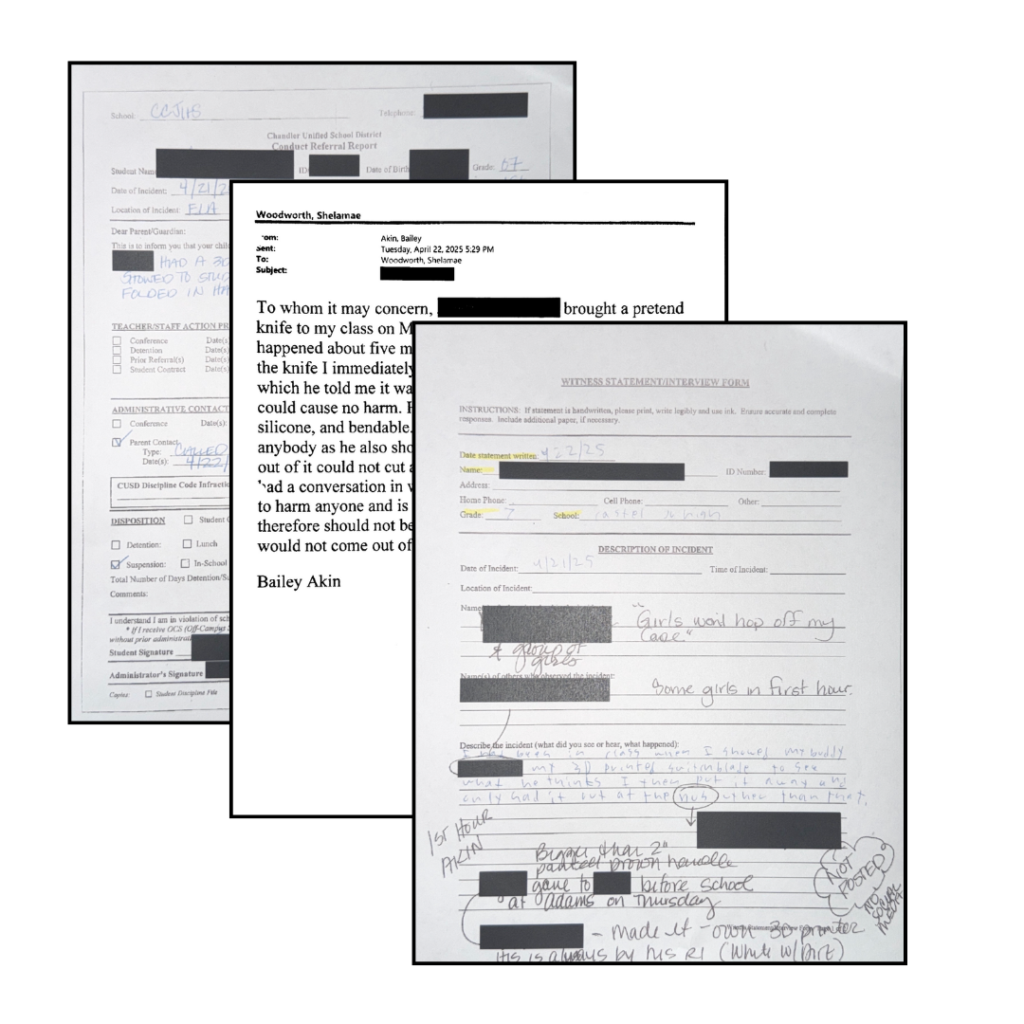
The district decided not to share the 3D-printed butterfly knife incident with the broader school community because, she added, “the educational institution was not disrupted, the incident was contained, there was no social media or posting of the item, the item was not a weapon.”
Experts caution that students can have social media accounts that neither school officials nor their parents are aware of, accounts best found via a thorough digital assessment.
School safety expert Kenneth Trump noted that these instruments may look like toys, but schools should still communicate transparently about these incidents.
“The community will be aware when incidents occur so it is best for them to get credible information from the school district versus relying upon social media information — and in most cases misinformation.”
The Casteel Junior High seventh-grader was given an off-campus suspension of three days.
What are best practices for school policy and training?
Schools are spending hundreds of thousands of dollars on school safety. But most school weapon-detection systems are designed to find metal, not the plastics used in 3D printing.
Even when schools say the objects were not printed on school equipment, many Arizona K-12 schools have 3D printers as part of STEM programs. Cocopah Middle School, for example, has a student club called the Robotics & 3D Printing Club.
Friedman insisted that the particular 3D-printed weapons found last year in Scottsdale schools were not printed on school computers, but he conceded that that had happened in the past with “a shank” with “a pointed end” similar to what you would find “in a jail.”
“There’s no real training for teachers at this time.”
– Joshua Friedman, safety director, Scottsdale Unified School District
“It’s like the vapes, you know,” Friedman added. “As soon as we educate them what a vape looks like, it looks like a Sharpie next week, or a highlighter the week after.”
Steven MacDonald is the director of training and development at Safer Schools Together, an organization that provides professional training for schools throughout North America to help them minimize and manage the risk of student violence. MacDonald says schools should use a threat assessment process involving a multidisciplinary team that includes law enforcement, school resource officers and other district-level security partners to evaluate what a student printed, why they printed it and whether there are warning signs online.
“You cannot have an accurate assessment of risk without considering the digital behavioral baseline of a subject of concern,” he said, adding that students sometimes “will leak their intentions” in online posts or chats.
Safer Schools Together recommends that schools implement anonymous reporting tools that allow students to report threats 24/7 and upload images. That way, if a student sees a threat in a group chat, they can report it without putting themselves at risk.
Parents, too, are part of the front line. MacDonald noted that it is crucial, no matter the functionality of the printed weapon, to “let the parents, caregivers know, hey, this is still very dangerous.” Adults should set rules early around new technology — just as families often do with a first phone, tablet or laptop.
“Being aware of what our children are looking up online, being aware of the accounts that they use, being aware of who they’re engaging with virtually is probably the best thing we can do.”